
Pinterest Blog
Introduction
Pinterest is a fast-growing platform all over the world, and at the same time, it is creating opportunities for several people to generate income from it. If we really talk about what Pinterest really is for, we get to know that it’s not just another social media platform but rather it’s a search engine just like Google. However, on Pinterest, you see images and videos regarding what you are searching for. Pinterest has a large audience searching for various ideas and suggestions, whether related to home décor, fashion ideas, or educational stuff. As I have told you, Pinterest has a large audience from all over the world, which you can use to your benefit. You can earn money online using that audience and convert Pinterest into your business rather than using it normally like other people do.
Why Pinterest Is Different from Social Media
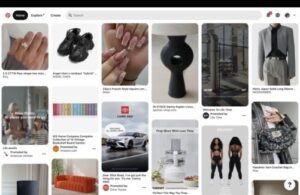
As I told you before, Pinterest does not act just as a normal social media platform but rather as a search engine. Several people search on it with buying intent, giving you the opportunity to earn through it. Another benefit of Pinterest is that the pins you generate stay visible to people for months, which helps you a lot in making money through old content as well, while on social media platforms, old content does not perform well enough. Once you have developed Pinterest traffic, it is a type of evergreen traffic if you continue posting pins.
How Pinterest Generates Income
Many people search for Pinterest monetisation or Pinterest income ideas, but they don’t really understand how Pinterest can actually generate income for them. Yes, it’s true that Pinterest can generate income for you, but it does so indirectly. What it actually means is that when you post pins, Pinterest sends visitors to your page or pins, and the interested visitors then convert into your customers. Now a second question arises: how much can Pinterest earnings be? A realistic answer to this question is that it totally depends on your niche, traffic, and strategy. I am not going to make unrealistic promises to you, but if you work hard, Pinterest has the capacity to turn into your full-time business as well.
How Long It Takes to Earn on Pinterest
Several beginners are interested to know when they will be able to generate their first income using Pinterest, but the reality is that growth on Pinterest takes several months, and it requires a lot of patience and hard work to see results. When you continue to post regularly and post quality content, your pin traffic starts to increase, and with that, your Pinterest income also increases. It at a minimum requires you to post consistently for 60–90 days before you see results. Then, slowly, it can convert into your passive income, and as your page grows, the income can increase gradually, but it requires hard work.
Choosing a Profitable Pinterest Niche
As I have told you, Pinterest requires long-term hard work at first, so choose a niche in which you have interest so that you enjoy making and creating pins, and work feels easy for you. Secondly, choose a niche which has high market demand and what people actually search for. The top niches on which you can work are:
– Finance
– Health
– Recipes
– DIY
– Fashion
– Home Decor
– AI
– Online Jobs
These are some profitable niches with a high audience, which would eventually help you in generating money.
Why Blogging Is the Best Way to Monetise Pinterest Traffic
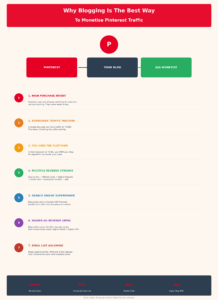
If I were to give you a suggestion, it would be that you should make a blogging website. Blogging for beginners means having a website where you post something informative which helps people, and when you get your website monetised, you earn through it when people see ads on it. For that, you need a website, and then you have to buy a domain and install WordPress, on which you design your blogging or another website. If you continue to post blogs and people view them, and your website has good views, you can turn your blogging website into your business. It is a business which gives you the freedom to work from anywhere.
Creating High-Quality, SEO-Friendly Blog Content
Whenever you write a blog post or create content, the primary goal, as I have mentioned before, should be to solve a problem for the user. Your content should assist the reader in their daily life and address their specific issues. Write in detail, ensuring that the reader receives comprehensive information relevant to their problem and that every aspect is covered. Also, try to include images in your blog posts. This makes it easier for users to understand and relate to the material, as human psychology dictates that people grasp visual information more quickly. Aim for consistency in posting and prioritise quality above all else. Furthermore, try to create “evergreen” content—material that remains in demand in the market over the long term. Be sure to optimise your content for SEO so that it ranks high on Google search engines and gets recommended to others, thereby driving maximum traffic to your website and allowing you to generate income through ad views.
Benefits of a Pinterest Business Account
Therefore, whenever you set up a profile on Pinterest, you should aim to switch your account to a “Business Account,” as this offers numerous advantages. One of the key benefits of creating a Pinterest account is the access it provides to analytics and advanced features. You can use these analytics to discover what is trending, what people are searching for, and the interests of different demographics, such as the ratio of male to female users and the specific products or topics currently gaining the most traction. This data helps you select your niche and gather business-relevant insights, enabling you to create targeted Pins.
How to Create Attractive Pinterest Pins
When it comes to creating pins, you should aim for designs that are highly attractive and visually appealing. You can use various tools for this, such as Canva, to generate pins tailored to your niche. Ensure the text on the pin is large and easy to read, using bright colours and strong, compelling headlines that grab attention. Try to create “viral-style” pins by observing current trends before generating your own. Also, make sure to incorporate your brand identity into the pin. For instance, if you have a website, include its branding so people know where to find it. This helps drive audience engagement and directs traffic to your website.
Pinterest Keyword Research and Pin Optimisation
When you start generating keywords, you have to first research what people are searching for regarding these keywords, and you have to try to use those keywords naturally in your pins. It is okay, and create special boards for your pins, which is a very important part. Keep the pin interesting and the name of the board also according to your pins so that it helps a lot in growing your account. In the title and description of the pins, you also have to try to use the words related to the pins and the phrases which people are searching for more, and design them in the same way. Of course, you have to make your profile also according to your niche. But it should not happen that while using keywords in your pin, you stuff it so much that you confuse Pinterest’s algorithm and it does not understand what your pin is related to. Your title or description should be in simple words, to the point and according to the thing about which you have posted.
Why Pinterest Boards Matter
Another crucial aspect of Pinterest is creating boards. As I mentioned earlier, it is essential to create boards. This helps organise your content effectively. You should create boards tailored to your specific niche and ensure they are SEO-friendly. This way, whenever someone searches on Pinterest, your content, or the pins you have posted, appears at the top of the results. Consequently, your audience grows steadily, as Pinterest’s algorithm uses these boards to deliver your content to the right users.
Consistency and Scheduling Pins
Generating content requires a great deal of consistency, so you should create a plan, perhaps in a notebook, detailing how many pins you will post daily or weekly. To begin, you could start by creating and posting three pins a day, gradually increasing your output as your audience grows. You can also create an automated system by preparing all your pins for the entire month in advance and scheduling them. Pinterest will then automatically publish them at the times you have set. This allows you to complete a full month’s work in just one day.
Driving Traffic from Pinterest to Your Website
To drive your audience, or the visitors who view your pins, to your website, you should include a link to your site beneath the pins. People will click this link to visit your blog or website. Once there, they will view the content and the ads displayed on the page, generating earnings for you. Incorporating SEO keywords will further boost traffic, and targeting audiences in Tier-1 countries, such as the US, Australia, and others, will result in higher income.
Other Ways to Make Money with Pinterest
Apart from the usual methods, there are many other ways to generate income indirectly through Pinterest. One such method is affiliate marketing. By sharing a link to a product, you earn a commission whenever a user clicks on it and makes a purchase. Additionally, beyond just blogging, you can sell digital products on Pinterest, a business model that is currently seeing significant growth. You can also sell online courses, offering valuable insights and knowledge to people on various trending topics.
Final tips
In conclusion, I would simply advise you to start working on this right away and act quickly, as the world is evolving rapidly. To compete effectively, you need to take practical steps and begin working on Pinterest immediately. If I were to offer a few final tips for rapid growth on Pinterest, they would be these: create and post high-quality content, conduct keyword research, optimise your content and descriptions for SEO, and study Pinterest growth strategies to understand how accounts expand over time. Additionally, observe other accounts in your niche to see how they grew. Learn from their methods, avoid repeating their mistakes, and use their content as inspiration to generate your own ideas.